

Hearing Aids
Hearing aid technology has improved drastically over the past couple of decades. Early devices relied on vacuum tubes and bulky batteries, but today’s instruments take advantage of digital signal processing, microchips and computerization. Keeping track of the latest technological features can be challenging, but we’ll cover a few of the more popular options here.
Analog technology still exists, but fewer and fewer manufacturers offer these devices, and many have phased them out entirely. Analog units employ a particular frequency based on your audiogram and all sounds are amplified in the same manner, whether speech or background noise. Some analog hearing aids can be programmed for different listening environments.
Digital programmable hearing aids use digitized sound processing to convert sound waves into digital signals. A computer chip determines whether the signals are speech or noise and converts them into clear, amplified signals. Advantages in digital processing are significant: it offers improved programming ability, a more precise fit and a number of features designed to improve or enhance functionality, including:
- Gain processing reduces background sounds and microphone noise to offer a clearer sound for the listener, with less clinical adjustment needed.
- Digital feedback reduction (DFR) relies on cancellation systems to eliminate or reduce feedback.
- Digital noise reduction (DNR) reduces background noises for improved speech recognition.
- Directional microphones utilize dual microphones, focusing one on the sound source while the other decreases background noise, to enable the user to better determine directionality.
- Wireless connectivity with Bluetooth® devices provides great flexibility.
Analog Hearing Aids
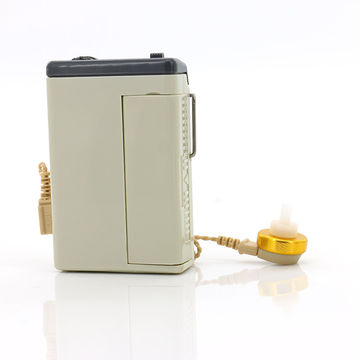
| BODY WORN HEARING AIDSBody worn aids consist of a case and an earmold, attached by a wire. The case contains the electronic amplifier components, controls and battery, while the earmold typically contains a miniature loudspeaker. The case is typically about the size of a pack of playing cards and is carried in a pocket or on a belt. Without the size constraints of smaller hearing devices, body worn aid designs can provide large amplification and long battery life at a lower cost. |
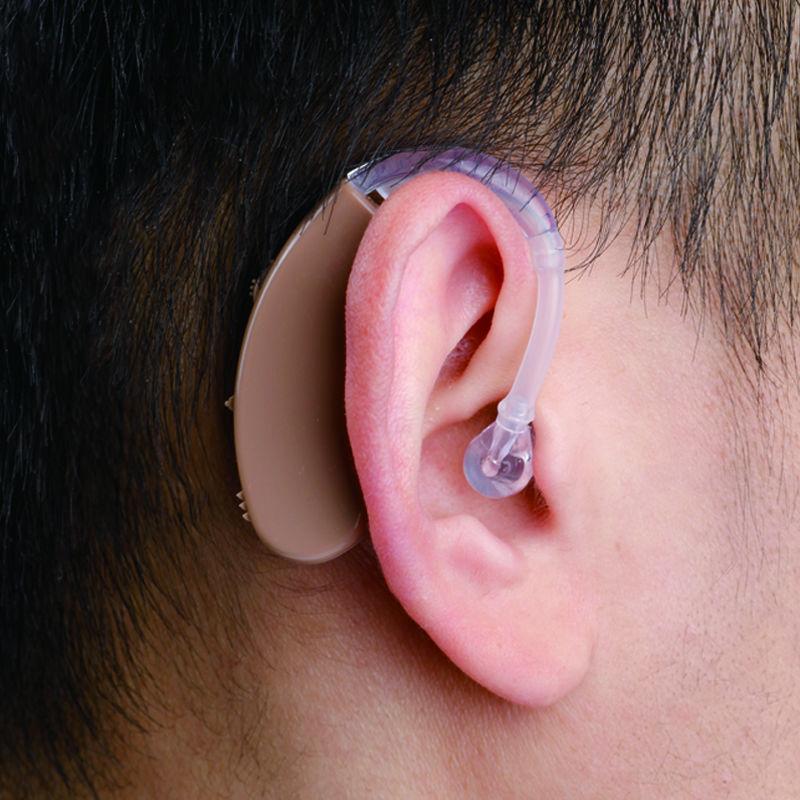
| BEHIND THE EAR [BTE]This is a simple technology hearing device , fitted back side of the ear and can be adjusted volume control switch to make slow or loud sounds to make comfortable hearing as per individuals choice. it has got small battery placed inside the hearing device which last 20-30 days depending upon uses. this can be used for most people who can not afford automatic digital hearing aids. it works as just amplifiers which makes sound louder in constant manner. |
Types Of Digital Hearing Aids
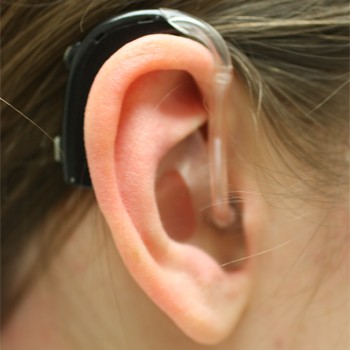
| TRADITIONAL BEHIND THE EAR [BTE]This type is available in several different sizes such as a larger size for power, a traditional size, and a miniature size. It has the following features:
|
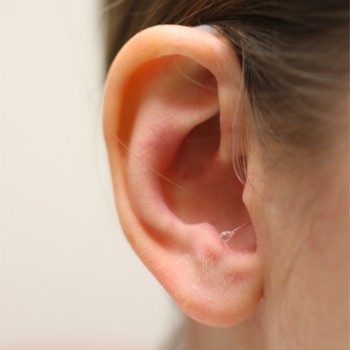
| OPEN EAR BEHIND THE EAR [BTE]
|
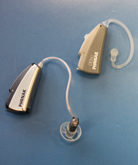
| CROS or BiCROS for Single Sided Deafness [SSD]
|
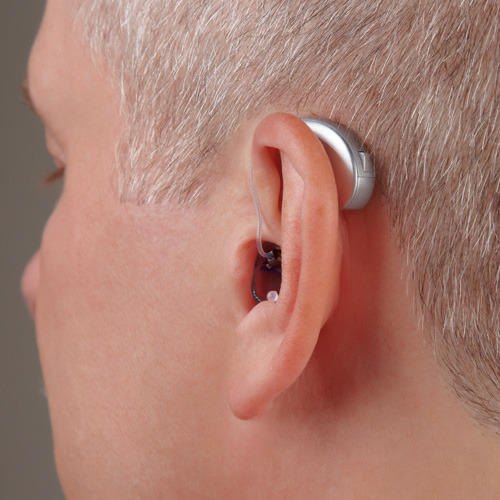
| Receiver-in-Canal [RIC]Receiver-in-canal (RIC) hearing aids resemble BTE aids but are usually smaller and less visible. With these devices, the receiver rests inside your ear canal and contains the speaker, while a nearly-invisible microphone tube connects it to the processor sitting behind your ear. RIC hearing aids provides best pleasant sound quality and easy & comfortable to wear and also give more satisfaction to user for better speech understanding in noisy environment, group conversations, from distance, watching TV and talking over telephone also. this type of hearing device can be used for mild to severe degree of hearing loss cases and to be fitted carefully & precisely through programming softwares. |
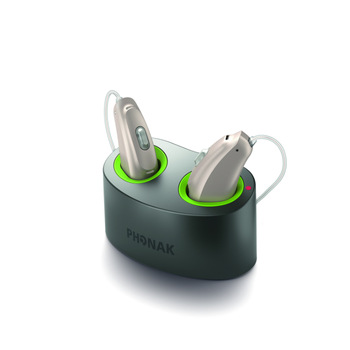
| RECHARGEABLE HEARING AIDSIt doesn’t matter where you are or what you’re doing, the rechargeable hearing aids were created to simplify your life. Finally, a chance to free yourself from the hassles of disposable batteries with a groundbreaking built-in lithium-ion battery technology. rechargeable hearing aids are the first to feature a specifically designed built-in lithium-ion rechargeable battery that provides 24 hours* of hearing with one simple charge. With 40% more power than conventional rechargeable batteries, lithium-ion is reliable and capable of supporting the superior technology and performance. |
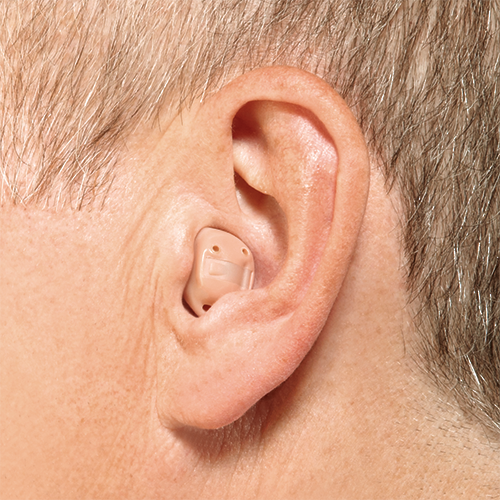
| IN THE CANAL [ITC]An in-the-canal hearing aid is custom moulded and fits partly in the ear canal, but not as deeply as the completely-in-the-canal aid. This hearing aid can improve mild to moderate hearing loss in adults. An in-the-canal hearing aid:
|
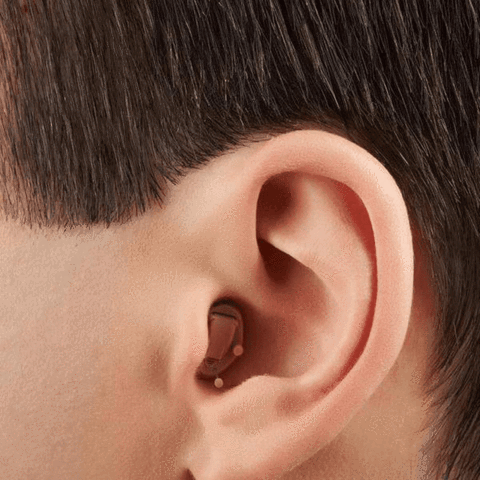
| COMPLETELY IN THE CANAL [CIC]Completely-in-the-canal hearing aids are moulded to fit inside your ear canal and can improve mild to moderate hearing loss in adults. A completely-in-the-canal hearing aid:
|
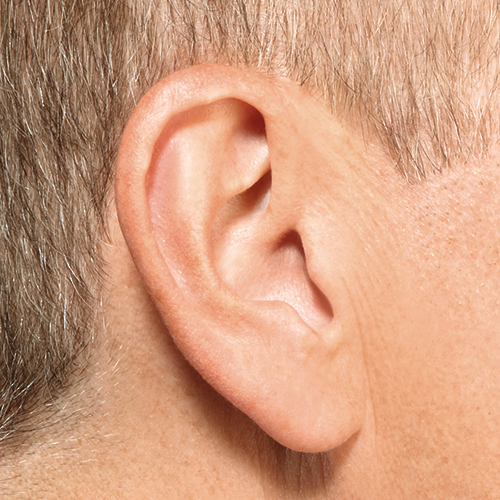
| invisible (IIC) hearing aidsInvisible hearing aids, as the name suggests, are not visible to the eye. They are hidden deep in the ear canal and, like most hearing aids, there are a number of styles or variations to these type of hearing aids. They have a variety of names such as ‘invisible-in-the-Canal’ (IIC), contact lenses for the ear, extended wear hearing aids. These are custom made hearing devices, which generally means most types require an impression of your ear is required to fit them. They sit deep down your ear canal so the procedure to take the impression can sometimes be a little uncomfortable, but your Hearing expert will take you through the process so you know what to expect. |